
Hotter nights in the Coachella Valley can disrupt sleep and increase health risks
As of this writing (August 15, 2026), over 72 million people in the U.S. are under moderate to extreme heat risk. This risk level isn’t based on daytime high temperatures alone. NOAA’s HeatRisk tool factors in overnight lows too, since a hot day followed by a hot night is what increases the danger.

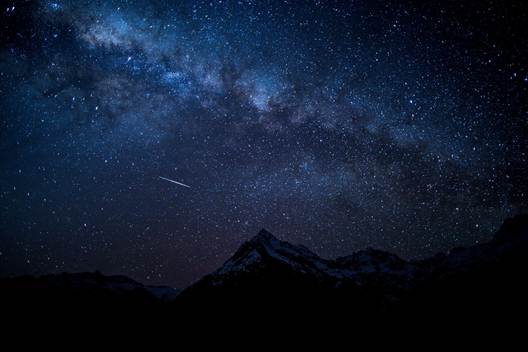
If you went outside this week to watch the Perseid meteor shower, you were probably focusing on the sky and not the air. The meteor shower peaked overnight from August 12 into August 13 with a dark new moon and fairly clear desert conditions here in the Coachella Valley.
A warming trend after dark
Being outside in the evening and past midnight, you couldn’t ignore something else: the heat. Palm Springs temperatures remained in the low 80s (27-28°C) while meteors crossed overhead, and the temperature changed little in the hours before dawn. It was a warmth that lingered in the air after sunset, and your body probably noticed.
We tend to describe desert heat through daytime numbers: the afternoon high, the record temperature, the reading on a car dashboard. But hot nights are a different part of the story. When temperatures do not fall enough for bodies, homes, streets, and landscapes to cool down, they stay hot into the next day.
We already know that heat-trapping pollution is making summers hotter across the globe. But it’s not just the days that get hotter. Nights are warming, too. When it doesn’t cool off much at night from the peak day temperature, it’s harder for people to recover from the extreme summer heat. According to weather.gov, heat is the deadliest weather-related hazard in the U.S., and warm summer nights can worsen heat stress, sleep loss, and other heat-related risks during the hottest time of the year.
Climate Central found that 95% of the U.S. cities it analyzed are now experiencing more unusually warm summer nights than they did in the early 1970s: an average increase of 24 nights each summer. The biggest increases were in the Southwest, South, and Southeast, where cities saw roughly 33 to 35 additional warm nights.

The organization also examined how much of this change is linked to human-caused climate change. In 247 major U.S. cities, it counted nights when climate change made above-normal temperatures at least twice as likely, then tracked how those nights increased from decade to decade.
Why hot nights are hard on the body
Nighttime heat is not simply leftover daytime heat. It can disrupt sleep, strain the heart, and make the next hot day harder to manage.
People sleep best when their core body temperature falls. This helps the body shift into deeper sleep and gives the cardiovascular system a chance to recover.
A recent study of older adults found that warmer bedrooms were associated with signs of greater overnight cardiovascular strain, with effects becoming more pronounced above 79°F (26°C). The findings do not establish one safe temperature for everyone, but they reinforce the importance of reducing overnight heat exposure, especially for older adults and people with health conditions.
A review article by Kenny et al. finds that indoor heat exposure is a leading cause of heat-related deaths, since most fatal heat events happen at home, not outdoors.
The strain can compound. When temperatures stay high overnight, the body has less time to recover before the next day’s heat arrives, and this matters especially during heat waves when several hot days and warm nights can stack up with little relief.
The cost of staying cool
But keeping a home cool overnight has a cost. Climate Central found that cooling demand has increased on average by 37% in the U.S. This can be a strain for vulnerable households and may force them to delay bills or skip AC in ways that can threaten their health or quality of life.
In the Coachella Valley, summer nights routinely stay in the 80s (27–32°C). For residents without reliable or affordable cooling, the health risks and additional costs aren’t theoretical.
Daytime heat gets the most attention, but hot nights bring risks almost unnoticed when people are supposed to be resting.
Noticing the night
That night this week under the meteor shower is worth remembering not just for the shooting stars, but because it gave us a moment to notice the heat after dark. Most nights we don’t. We check the daytime high, we plan around the afternoon sun, and we assume the hardest part is over once the sun sets. Increasingly that’s not true.
There is no single fix for warmer desert nights, but practical steps can reduce exposure. Close curtains or shades before afternoon sun heats the home, use fans to improve air movement, and seek air-conditioned spaces or a cooling center when conditions become unsafe. Checking on neighbors, especially older adults and people who live alone, also matters during prolonged heat.
You can’t do anything about a risk you don’t know exists. So paying attention to nighttime heat is a starting point. The next time you are outside after dark, notice the air as closely as the sky.
Resources:
Cooling Centers, Riverside County
Sources & Further Reading:
Climate Central: Climate Change Is Driving More Warm Summer Nights in U.S. Cities
Climate Central: Climate Change is Costing People Sleep
Climate Central: Warming U.S. Cities Face Higher Cooling Demand and Energy Bills
Weather.Gov: Weather Related Fatality and Injury Statistics
Research Articles
O’Connor FK, Bach AJE, Forbes C, Rutherford S, Binnewies S, Sabapathy S, Morris NR. Effect of nighttime bedroom temperature on heart rate variability in older adults: an observational study. BMC Med. 2025 Dec 29;23(1):703.
Mora, C., Dousset, B., Caldwell, I. et al. Global risk of deadly heat. Nature Clim Change 7, 501–506 (2017).
Kenny GP, Flouris AD, Yagouti A, Notley SR. Towards establishing evidence-based guidelines on maximum indoor temperatures during hot weather in temperate continental climates. Temperature (Austin). 2018 May 11;6(1):11-36.
FAQ
Why are nighttime temperatures rising in the desert Southwest?
Human-caused climate change is driving more warm summer nights across nearly all major U.S. cities. Climate Central found that 95% of the U.S. cities it analyzed now see more unusually warm nights than in the early 1970s, with the Southwest, South, and Southeast seeing the biggest increases, roughly 33 to 35 additional warm nights a year.
Why is nighttime heat dangerous, even if it’s cooler than the daytime high?
The body needs its core temperature to drop to sleep well and let the cardiovascular system recover from a hot day. When nights stay warm, that recovery doesn’t happen. A 2025 study found overnight bedroom temperatures above 79°F (26°C) were linked to greater cardiovascular strain in older adults.
What indoor temperature is considered unsafe overnight?
Research suggests risk increases above 79°F (26°C), particularly for older adults and people with health conditions, though no single “safe” number applies to everyone. Most heat-related deaths occur indoors, not outdoors.
How hot do nights get in Palm Springs and the Coachella Valley?
Coachella Valley summer nights routinely stay in the 80s (27–32°C), even in the hours before dawn.
What can I do to stay safe on hot desert nights?
Close curtains or shades before afternoon sun heats the home, use fans to improve air movement, and use air-conditioned spaces or a cooling center if conditions become unsafe. Checking on neighbors, especially older adults and people living alone, matters during prolonged heat.
Discover more from Cactus and Climate
Subscribe to get the latest posts sent to your email.


